ERC Proof of Concept Grant for prof. Harald Schmidt
Professor Harald Schmidt received an ERC Proof of Concept (PoC) grant to develop a new medication for stroke and other acute neurodegenerative conditions. In 2011, Schmidt received an ERC Advanced Investigator Grant worth 2.3 million euros for his research on the role of oxidative stress in the development of cardiovascular disease. This study led to the development of a potential new therapy for stroke patients. The 150,000 euro ERC PoC grant will allow Schmidt to optimise his treatment method (chose the optimal compounds), carry out preclinical trials and work out a business plan for the commercial production of the drug, to provide PoC for a first-in-man trial in stroke.
Stroke (the collective name for cerebral haemorrhage and cerebral infarctions) is the second leading cause of death and the leading cause of disability. Currently, there is only one drug available – an anticoagulant; however, this drug is marginally effective and has over thirty contraindications and a high risk of fatal bleeding. As a result, 85% of stroke patients are not treated with this drug. The needed innovation would be a drug which is broadly applicable, i.e. has no contraindication, can be given in all forms of stroke and already in the ambulance, bears no risk to cause secondary bleeding, is effective (i.e. reduces the brain infarct, increases survival and improves neurological outcomes for patients) and has a different mechanism of action (i.e. directly neuroprotective). Schmidt discovered a new therapeutic principle that fulfils the above requirements as part of his ERC Advanced Investigator Grant. This involves a combined therapy that targets three different points of the disease mechanism, thereby increasing the chance of clinical success.
The PoC research project, titled 'SAVEBRAIN: proof of principle for a first-in-class neuroprotective therapy in stroke and other acute neurodegenerative conditions', is being carried out in collaboration with the Fraunhofer Gesellschaft zur Foerderung der angewandten Forschung (Lübeck).
Also read
-
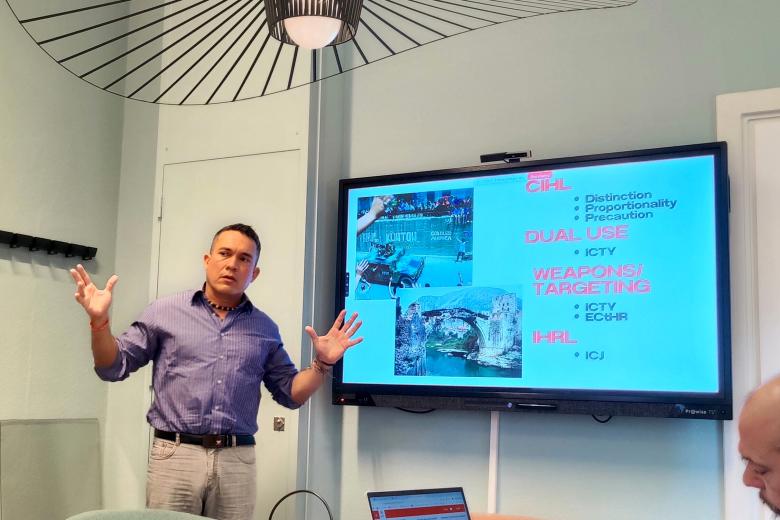
Andrés Caceres Solari on No room for Human Rights in Gaza and Ukraine: How the Law Legitimizes Urban Devastation
Pick Our Brains Session with Andres Caceres Solari
-
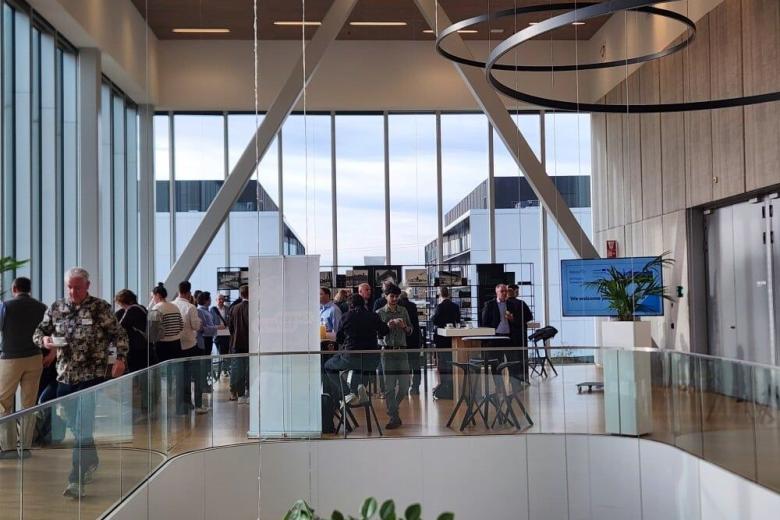
AMIBM hosts the final Realise-Bio conference
The Aachen Maastricht Institute of Biobased Materials (AMIBM) hosted last week the third and final Realise-Bio annual conference, bringing together the Dutch and German bioeconomy ecosystems at the Brightlands Chemelot Campus.
-
Macrophages as key to treating liver fibrosis
Sabine Daemen is researching how certain macrophages can slow down fatty liver disease and fibrosis in order to develop new therapies.