A knowledge agenda for a healthy urban environment
In the soon-to-be completed first phase of ZonMw project "Making space for health in the city: towards a South Limburg knowledge agenda", knowledge gaps were identified about how our urban living environment influences health. A whole range of methods was employed. Let's highlight two methods that were a bit more out-of-the box.
Hunters in the neighborhood
Dear Hunter refers to itself as a spatial-anthropological artistic research bureau. Like hunters in their lodge and observation post, the staff lives and works on location in order to be fully immersed in the specificity of that place. Their method was ‘participative observation’ of the use of public green space. Concretely, they lived in multiple residential locations, spread over the neighborhoods in Maastricht-Noord Oost, and ‘commuted' to a permanent work location, which in this case was their sea container next to the Geusseltbad with a view of the sports fields and the public green.
Examples of knowledge-questions derived from their method include: “How can unused public places, such as alleys or temporarily unused plains after building demolition, be used to improve the social cohesion in the neighborhood? And how can the creation of routes through such places stimulate physical activity?”
Project partners
- UM International Centre for Integrated assessment and Sustainable development (ICIS)
- UM department of Health Promotion
- UM department of Health Services Research
- GGD Zuid Limburg
- Zuyd Hogeschool Lectoraat Smart Urban Redesign
- Municipalities of Maastricht and Kerkrade

Field hospital for professionals
Pantopicon is a foresight and design studio. For this project, they framed two working sessions with relevant local stakeholders along the metaphor of a field hospital, thereby referring to not only the health-related context, but also evoking a sense of urgency and emphasizing a location-specific approach. Each session - one in Kerkrade and one in Maastricht - started out with an observational walk throughout the local neighborhood at hand. Subsequently, participants identified existing and potential future ‘symptoms’ of the neighborhood along the health-environment continuum. These were mapped, clustered and discussed on the metaphorical ‘body’ of the area. In order to anticipate the effects of potential future developments impacting the local situation, a so-called ‘eyesight/foresight’ test was utilized to stimulate the debate on future trends that might impact society in general and local health and environment in particular.
This approach brought to the surface questions such as: “Which health benefits are more likely to be achieved through centralization or (spatial) distribution of functions and facilities? What might the effect of these choices be on not only the use of spaces but also on how people move between them, on health benefits such as meeting and exercising, as well as on feelings of safety and security?”

Also read
-
Air conditioning isn’t the only solution during heatwaves, but what is?
Air conditioners are not always the best solution to cope with heat, says Hannah Pallubinsky, Assistant Professor of Nutrition and Movement Sciences at the Faculty of Health, Medicine and Life Sciences. A much better approach is to gradually acclimatise yourself to the heat or take a siesta.
-
Temporary appointments of rector and Executive Board chair extended
The Maastricht University Supervisory Board has decided to extend the temporary appointments of Executive Board chair Pamela Habibović and rector magnificus Jan Smits.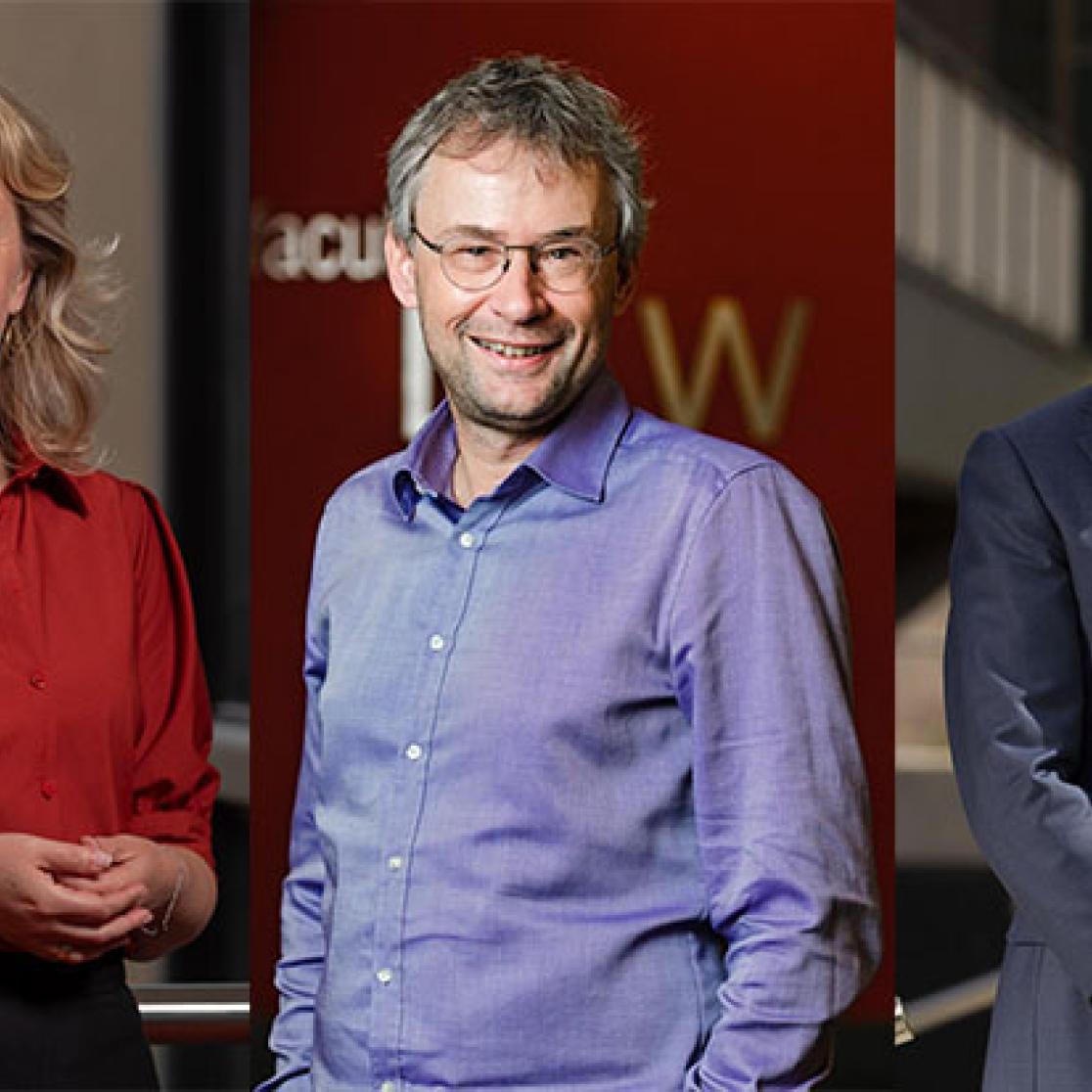
-
Evidence-based e-learning modules for sexual safety in higher education
Eight universities and universities of applied sciences are developing e-learning modules for the Dutch higher education sector to help reduce sexual misconduct and sexually inappropriate behaviour.