Student-Meet: Master your motivation, turn work into play
Have you ever had one of those days when you don’t feel like doing an assignment or are just not in the mood to go to a tutorial? Well, you’re not alone.
Intrinsic and Extrinsic Motivation
According to the Oxford Dictionary, motivation is the reason or reasons for acting in a particular way. Hans Savelberg, a professor of Evolving Academic Education at FHML, explained that motivation can be either intrinsic or extrinsic, but things can get more complex. “Be aware that extrinsic factors can extinguish intrinsic motivation”, he warned. This often happens when people begin to monetise activities they once enjoyed, turning them into tedious jobs.
Relatedness, Competence, and Autonomy
Bas Giesbers, a teacher at the School of Business and Economics (SBE), gave insights into motivation theories - including the self-determination theory. This theory states that humans have three fundamental psychological needs: relatedness, competence, and autonomy, which can influence motivation. For example, a lecture assigns a relevant and appropriately challenging paper. Setting the time and place for a learning activity in a familiar context can also help students feel more capable.
Teacher and mentor Eveline Persoon described how positive factors, such as rewards (e.g. good grades, praise, going out with friends) and negative factors, like fear of failing, can elicit motivation just as quickly as they can hinder it.

“It felt like… playing?”
That is why participants thought it important to investigate the source of this blissful state that so often evades us. It all came down to dopamine, a chemical inside humans that produces feelings of pleasure and motivation.
One student shared how she experienced increased motivation when given exciting and interactive projects where she had control: “It felt like… playing?”
Under the right circumstances, we can play for the rest of our lives. To some extent, we have control over those circumstances. For instance, we can create a conducive environment for tasks like decorating/tidying our room, going to a quiet space, and putting our phone on “do not disturb”. We could also find a study partner to hold us accountable.
After all, life is more fun when shared with others.
By Munshya Mupela, Student Assistant at EDLAB

Also read
-
How can teaching and research reinforce one another?
Teaching and research are often presented as competing parts of academic life. But do they have to be? The new Mending the Gap booklet shows how colleagues across Maastricht University are bringing both together in their everyday work.
-
When university discussions work – and when they don't
Discussion lies at the heart of Problem-Based Learning, but not every discussion unfolds in the same way. In this article, Johannes Kugel, a third-year Bachelor's student in International Business at Maastricht University, reflects on two tutorial discussions with very different outcomes.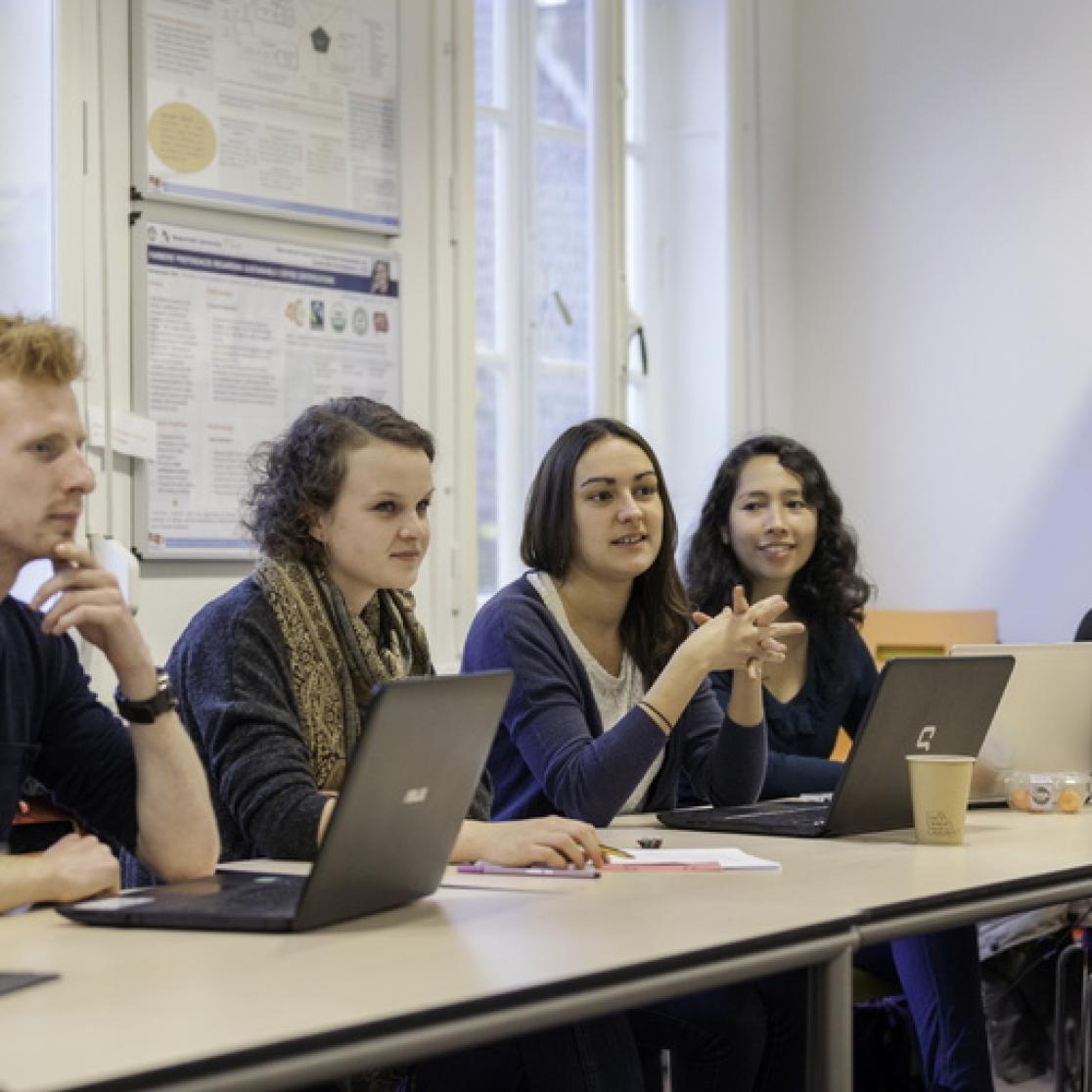
-
Education Research Grants: congratulations to the 2026-27 winners!
Congratulations to the six interdisciplinary teams that won an Education Research Grant for 2026-2027!