Nine new EDLAB education innovation grant winners for 2026
We are pleased to announce 9 new education innovation projects that have received an EDLAB grant for 2026!
Have a look at the projects in the (alphabetical) overview below.
This year’s winners will look into novel technology-enhanced learning options and a number of non-tech PBL classroom innovations. Topics include the innovative use of generative AI in learning, personalised AI generated feedback and AI tutoring, online collaboration, VR, role playing, co-creation and physical activation in conceptual debates.
In the upcoming months we will post videos of the grant winners in which they introduce themselves and their project further. Stay put.
EDLAB education innovation grant winning projects 2026
| Name/Faculty | Proposal abstract |
| Michael Capalbo (FPN) | Enhancing coding education through personalised feedback: an intelligent multi-agent system approach This project supports skill learning in PBL by developing a multi-agent feedback platform for coding education. It strengthens self-directed and constructive learning by delivering scalable, personalised, just-in-time feedback to students in large cohorts, addressing the persistent challenge of skill development within UM's PBL environment. |
| Diogo Cotta (SBE) | The Limburg Fresh Chain immersive roleplay Design, pilot, and evaluate an immersive theatre-inspired roleplay, “The Limburg Fresh Chain Crisis,” to teach supply chain management principles. The roleplay is to be developed with the help of theatre professionals and students, including a main script, role cards, a facilitator guide, assessment rubrics, and an evaluation report for dissemination. |
| Aki Härmä (FSE) | Proactive LLM-based course feedback agent Interactive course feedback agent, see the demo of our prototype, can help to get accurate real-time input from students, which is difficult in current systems like IWIO. The project develops the concept further by introducing a more reactive and interactive design and tests it in a course in 2026. |
| Dalena van Heugten (FPN) | Experience to expertise: Virtual Reality in clinical skill development Students need real-life professional tasks to acquire complex skills, such as clinical observation, to enhance transfer of learning to practice. Although internships serve to this effect, many institutes face problems offering such internships. Interactive 360-degree videos in WARP VR can facilitate this transfer of learning to practice within classroom activities. |
| Karen Könings (FHML) | Cultivating co-creation in education: developing the Co-Creation Tree Tool for collaborative educational design The newly developed Co-Creation Tree Tool (CCTT) supports educators, students, and other stakeholders in collaboratively (re)designing education. By guiding key decisions on why, what, who, where, when, and how to co-create, it fosters meaningful and effective collaboration, strengthens learner-centred and inclusive educational design, and advances Maastricht University’s vision for learning. |
| Henrique Marcos (LAW) | Legal Rule Tagger 2.0 This project introduces a digital platform where students can collaboratively unpack the elements of rules and visualise legal positions. It is designed for use across all core first-year skills. It will support students’ active participation, strengthen digital fluency, and foster reflective learning within and beyond the classroom. |
| Bart Mennink (FSE) | Crypture the flag Cryptography is pivotal for digital security. Our escape-room-style environment introduces an innovative teaching method designed to enhance students’ understanding of security concepts. The project targets our courses Cryptography, Computer Security, and Information Security (roughly 300 students yearly), but it is well-suited for other study programmes and outreach. |
| Linda Rieswijk (FSE) | AI tutor trainer: a chatbot and scenario database for practising communication and conflict resolution in research supervision This project develops an AI-powered chatbot and scenario database to help tutors and students practice managing communication and group dynamics in research supervision. It supports experiential, reflective learning in DACS tutor training for both bachelor and master projects, and in UTQ modules on supervision, feedback, and group dynamics. |
| Clara Weinhardt (FASoS) | Developing a handbook for the “Positioning Game”: an interactive teaching method for PBL tutorials This project translates an embodied and interactive learning method - rarely systematised within PBL - into a transferable teaching tool. The handbook will combine pedagogical grounding (drawing on active learning) with concrete classroom applications. The innovation lies in its simplicity, adaptability, and potential to enhance engagement, especially in bridging conceptual debates and case studies in tutorial settings. |
Also read
-
How can teaching and research reinforce one another?
Teaching and research are often presented as competing parts of academic life. But do they have to be? The new Mending the Gap booklet shows how colleagues across Maastricht University are bringing both together in their everyday work.
-
When university discussions work – and when they don't
Discussion lies at the heart of Problem-Based Learning, but not every discussion unfolds in the same way. In this article, Johannes Kugel, a third-year Bachelor's student in International Business at Maastricht University, reflects on two tutorial discussions with very different outcomes.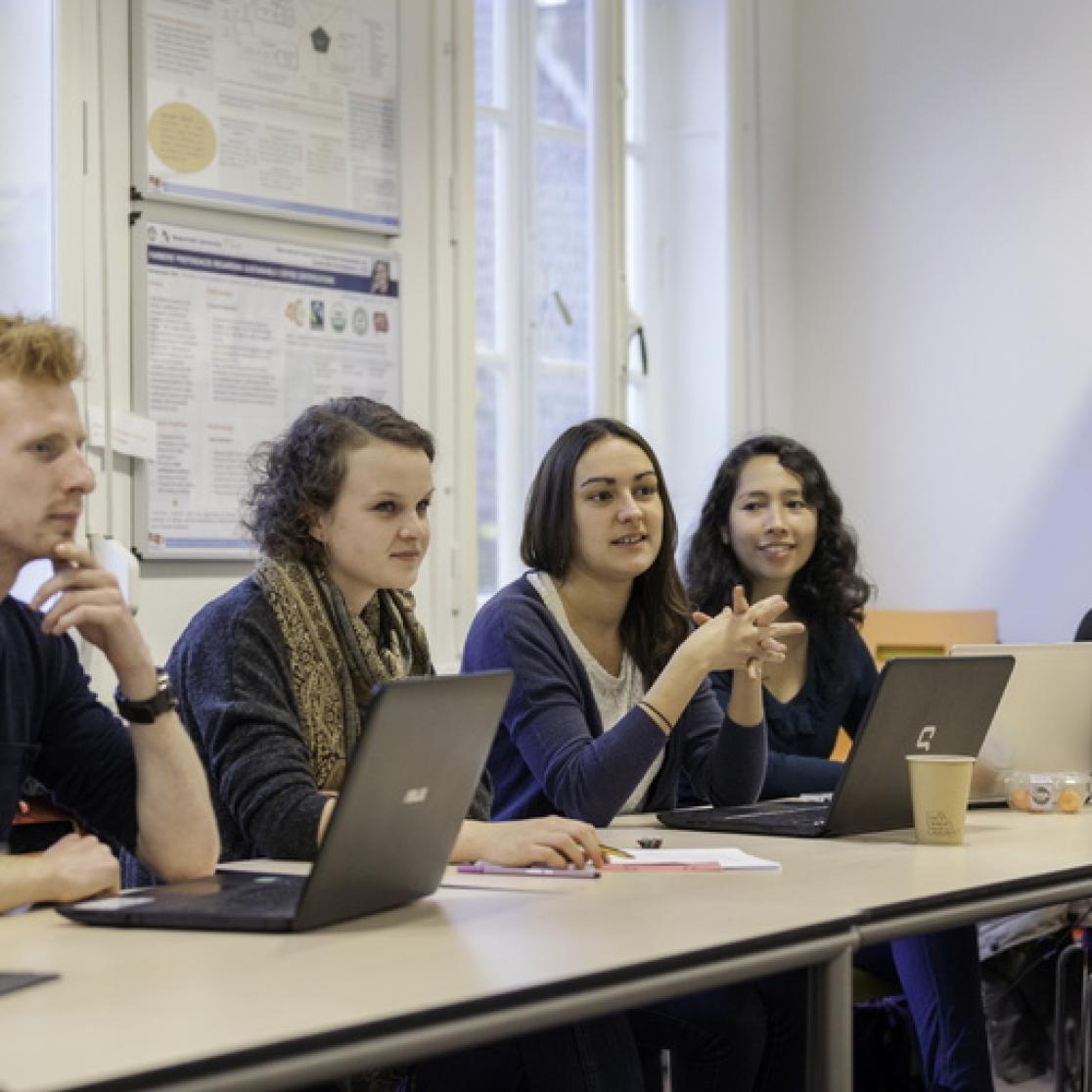
-
Education Research Grants: congratulations to the 2026-27 winners!
Congratulations to the six interdisciplinary teams that won an Education Research Grant for 2026-2027!