"Don’t lose the human element": Jason Goulah on education, AI, and the question of what makes us human
This article is only available in English.
Beyond his keynote at our Sixth Global Citizenship Education Symposium, Professor Jason Goulah reflected on his work in human education, global citizenship, and the place of artificial intelligence in society.
In a wide-ranging conversation with an EDLAB research assistant Megheti Tashdjian, he explored what it means to keep educating humans in an age of AI, focusing on inner transformation, global citizenship, and the ethical questions raised by technological acceleration. “The human must stay at the centre," Goulah argued, "... because when we talk about humanity, it isn’t abstract. It’s you. It’s me.”
Read the article below the image.
What remains human in the age of AI?
Across universities, AI is rapidly expanding what seems possible in higher education. Automated feedback systems, adaptive learning platforms, and data-driven decision-making promise efficiency and speed, altering not only how students learn but how universities understand teaching itself. Much of this change is framed as progress, and in many ways it is.
Yet beneath the momentum lie questions that no dashboard or performance indicator can capture. If machines can increasingly replicate human tasks, what remains distinctly human in education, and how should education respond?

This question lies at the centre of Jason Goulah’s work. Across his research and teaching, a consistent concern emerges: when education loses its human core, it risks becoming technically impressive without being meaningful, efficient without addressing what ultimately matters in learning. For Goulah, the issue is not abstract. “The real concern,” he explains, “is that we may begin to lose what makes us human: the human element.”
“Human education” as encouragement and inner transformation
Education, as Jason Goulah understands it, begins with the person in front of you, not with a system, a curriculum, or a set of outcomes. Human education has two closely connected movements, each shaping how learning is experienced.
The first is encouragement. Drawing on the work of Daisaku Ikeda, Goulah highlights the role of encouragement in helping people recognise their ability to take on challenges and transform their circumstances. “This isn’t only for young people,” he notes. “It applies to anyone, at any stage of life”. Learning becomes less about accumulating information and more about supporting people in expressing their humanity. “It’s not just about being humane or treating others kindly,” Goulah observes, “but about understanding what it truly means to be human,” including creativity, wisdom, compassion, and a deep sense of interconnectedness.
The second movement is what Ikeda calls the “Human Revolution”, the idea that education is inseparable from inner transformation. Goulah frames this as ongoing reflection: “Are we truly asking ourselves, how am I developing? How am I challenging and transforming who I was yesterday?”
The “posthuman turn”: what happens when humanism is questioned?
These concerns unfold within what Goulah describes as a “posthuman moment”. Posthumanist thinkers question traditional humanism for presenting a supposedly universal model of the human while often centring narrow Enlightenment ideals shaped by whiteness, masculinity, and social privilege. “The human subject is often implicitly defined through the lens of a white, male, heteronormative, Christian elite," he explains. These ideals also challenge the rigid separations humanism draws between humans and nature, or humans and machines, distinctions that feel increasingly unstable in the context of climate change and artificial intelligence.

Goulah approaches these debates from another direction. Drawing on Buddhist humanism, he points to a tradition that recognises universal dignity without exclusion. “Because Mahayana Buddhism holds that every person has the full capacity for enlightenment,” he explains, “that potential is not limited or determined by gender, race, age, or class.” From this perspective, separation itself becomes questionable. Human life unfolds in constant relation to other lives, environments, and systems. “You cannot ultimately separate yourself from the world around you,” Goulah says, “even if that interdependence is not always immediately visible.”
What is at stake in the age of AI: losing the human element
When it comes to artificial intelligence, Goulah does not begin with employment statistics or productivity gains. He begins with agency. Technology, he explains, is not inherently dangerous, nor is it something to be rejected. “The danger arises when we become overly dependent on technology, when we allow it to shape us to the point that we surrender our agency.”
Human beings are more than zeros and ones. What humanises us is not only what we can produce or optimise, but our awareness of time, loss, and mortality. Drawing on a Buddhist understanding, Goulah describes life and death not as absolute opposites but as interconnected parts of an ongoing rhythm. “If we understand life through the lens of eternity,” he adds, “it fundamentally changes how we view our purpose, our actions, and how we show up in the world.”
Why we teach, beyond “how”: AI as a philosophical challenge
These questions shape Goulah’s teaching. He works in global online master’s and PhD programmes bringing together students across continents and disciplines, from education and law to global health and the arts. In these spaces, questions about humanity are immediate: they surface through difference, disagreement, and lived experience. “Because students bring such diverse experiences and perspectives,” he observes, “these questions often arise naturally.”
Rather than treating ethics or humanistic inquiry as a brief topic, they are woven throughout the curriculum, shaping readings, discussions, and creative work. The guiding question remains consistent: how do these ideas live inside real practices and real lives?

Cross-cultural learning as disruption and growth
Cross-cultural experience plays a central role in this view of education. “Difference,” Goulah reflects, “acts as a mirror, revealing how much people mistake their own upbringing for what is normal.” Growing up in the United States during the Cold War, Goulah visited Russia shortly after the collapse of the Soviet Union, not to confirm inherited narratives, but to disrupt them. Even the discomfort of not speaking the local language becomes educational, slowing down everyday life and creating space for reflection.
A closing message: education as participation
At the heart of Goulah’s work sits one organising idea: interdependence. “Your life is not separate from other phenomena,” he says. “Everything is fundamentally interconnected.” Education matters because it makes that interconnection visible. “If life is interdependent,” he continues, “then nothing exists in isolation. That understanding develops wisdom and the ability to perceive interconnectedness. It builds courage, not to fear or deny difference, but to grow through our encounters with it. And it nurtures compassion, the capacity to sustain imaginative empathy.”
“The human must stay at the centre,” Goulah concludes. “Because when we talk about humanity, it isn’t abstract. It’s you. It’s me. That’s where all of this actually plays out.”
By Megheti Tashdjian, EDLAB research assistant
Also read
-
How can teaching and research reinforce one another?
Teaching and research are often presented as competing parts of academic life. But do they have to be? The new Mending the Gap booklet shows how colleagues across Maastricht University are bringing both together in their everyday work.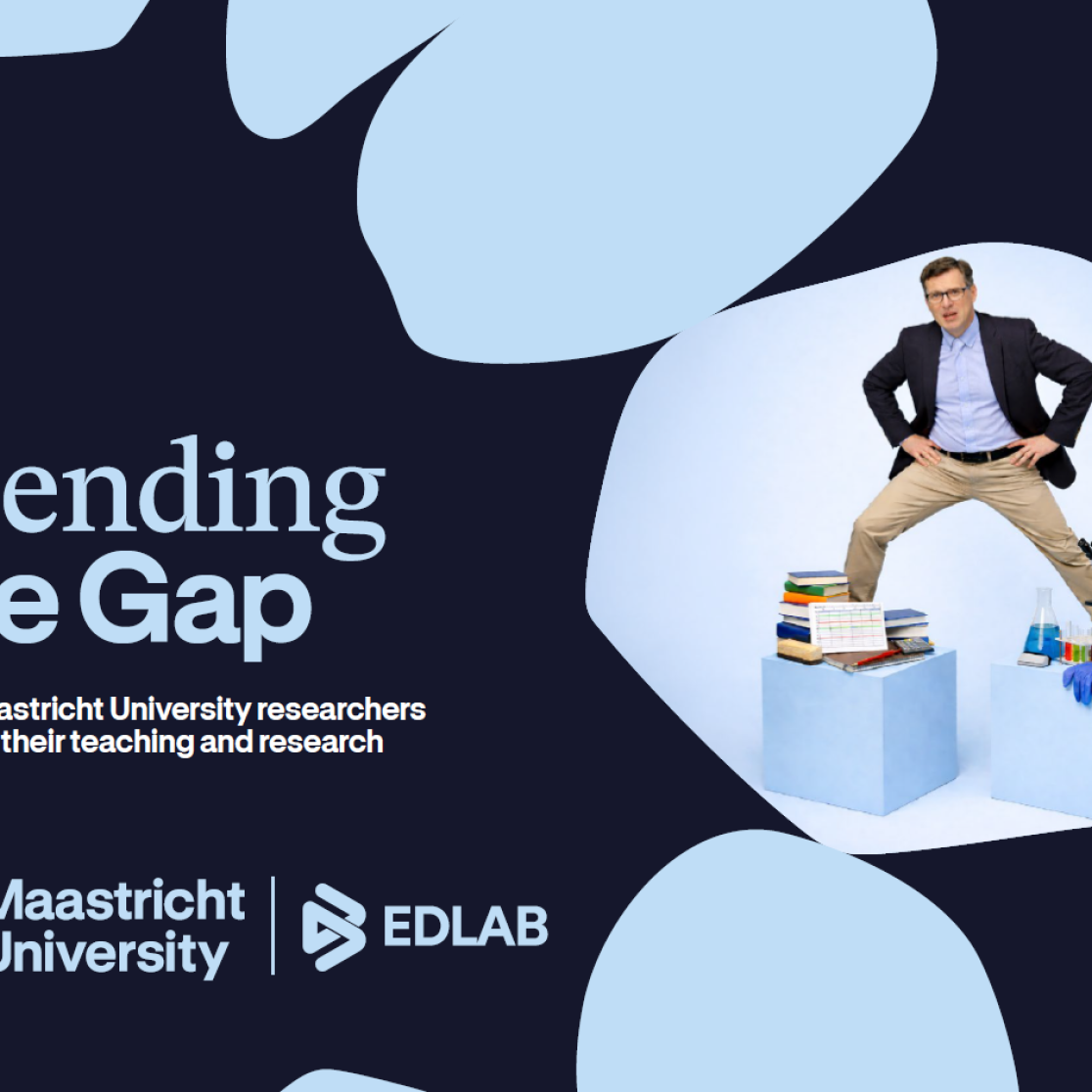
-
When university discussions work – and when they don't
Discussion lies at the heart of Problem-Based Learning, but not every discussion unfolds in the same way. In this article, Johannes Kugel, a third-year Bachelor's student in International Business at Maastricht University, reflects on two tutorial discussions with very different outcomes.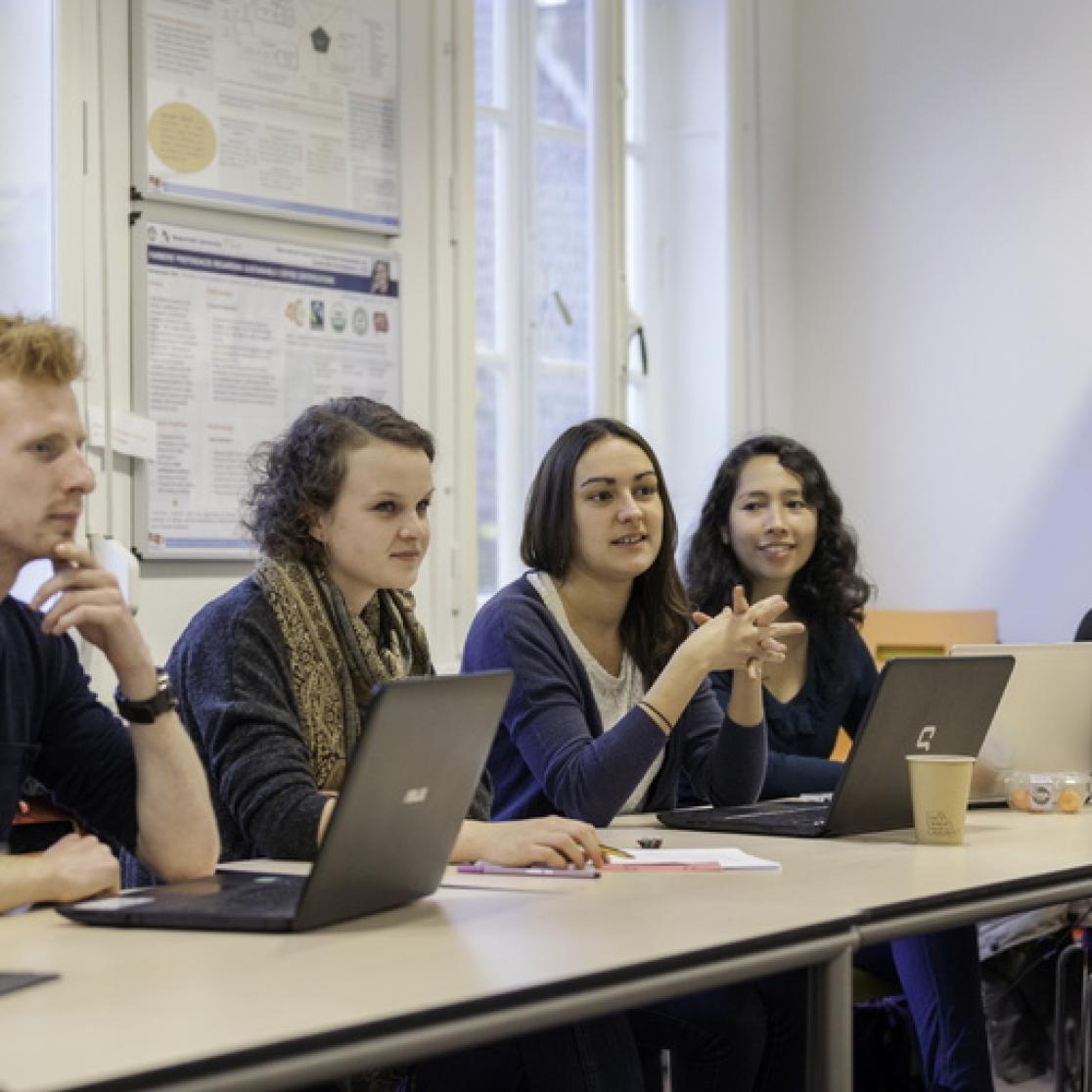
-
Pre-registration open for Education Research Day 2026
EDLAB warmly invites you to join us for a full day of sharing, learning, skill development and networking inspired by your passion for education research and innovation.